






Twaha Kagabo’s Flip-Flop Exposes the Crisis of Political Integrity in Uganda
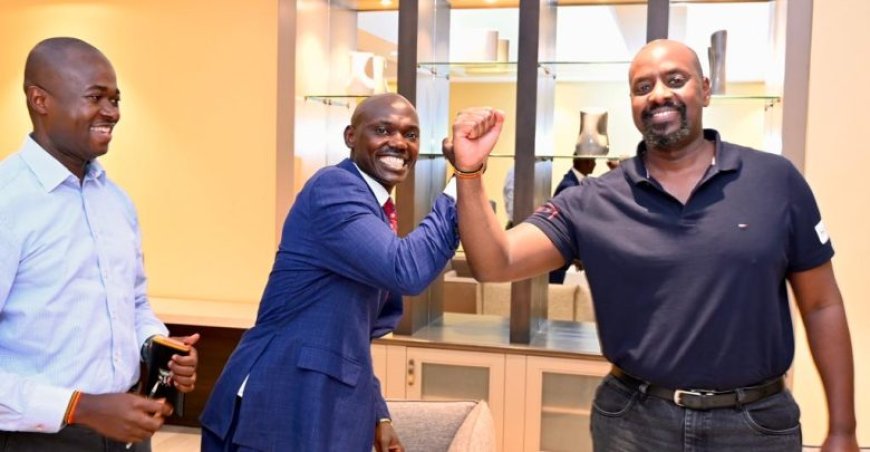
Ugandan politics is at a dangerous crossroads — not because of external threats, but because of internal decay disguised as strategy. What we are witnessing is not political maturity, but political opportunism. The lines that once defined ideology, loyalty, and service are now blurred by ambition and self-preservation. And perhaps no case illustrates this better than that of Dr. Twaha Kagabo.
Once a Member of Parliament under the National Unity Platform (NUP), Kagabo crossed over to the ruling National Resistance Movement (NRM) . This move came amid growing dissatisfaction with the opposition and alleged frustrations within NUP ranks. But while crossing party lines is not inherently wrong — and can at times reflect genuine ideological shifts — what followed undermined any such claim.
After his defection, Kagabo contested in the NRM primaries for Bukoto South. He was defeated by Hajji Muyanja Mbabaali, who secured nearly double the votes. Initially, Kagabo conceded, calling for unity within the party. But just ten days later, he made a dramatic U-turn, crying foul and declaring that he was cheated. He has since vowed to run as an independent in the 2026 general elections — abandoning both NUP and NRM in a single election cycle.
This is not a strategy. It is opportunism.
It’s not just about Kagabo. Across the political spectrum, Ugandans are watching leaders treat political parties like commercial buses — hopping on and off as long as the ride seems smoother. Today, a politician is NUP. Tomorrow, they wear yellow. And if that doesn’t work, they run as independents. The implications are severe:
1. Erosion of Public Trust:
When leaders constantly shift allegiance without explaining their convictions, it sends a clear message: voters’ choices don’t matter. Elections become theatre, not a sacred civic act.
2. Weakening of Political Institutions:
Parties are meant to serve as pillars of ideology and policy direction. But how can they fulfil this role when they are reduced to mere election vehicles, and leaders treat manifestos as optional reading?
3. Decline in Accountability:
If a politician knows they can run to another party — or as an independent — after losing fair and transparent primaries, what incentive do they have to remain accountable to party processes or their constituents?
4. Normalization of Betrayal:
In a healthy democracy, changing political positions should come with explanation, conviction, and even political cost. But in Uganda today, betrayal is repackaged as “flexibility” or “pragmatism.” And the electorate, increasingly disillusioned, shrugs it off.
Dr. Kagabo's story would be less troubling if it were an isolated case. But it’s part of a pattern: from opposition figures joining the ruling party after losing influence, to ruling party members running as independents when denied party tickets. Political loyalty is now transactional — a tool for survival, not service.
This trend is not just undemocratic — it’s destabilizing. It weakens ideological clarity. It confuses the voter. And it ultimately builds a political class that serves itself, not the nation.
Uganda must draw a line. Parties need to re-emphasize ideological education and put in place mechanisms that discourage casual defection. Voters, too, must stop rewarding political gymnastics and start demanding consistency, conviction, and clarity.
We must re-learn that integrity in leadership isn’t about who wins or loses a seat — it’s about standing for something. If we don’t, we risk building a nation led by turncoats instead of torchbearers.